
Train Market
A founder approached me with a vision: build the "Fiverr for personal training." He had industry connections, a clear business model, and needed foundational research and an MVP to pitch investors. The project followed the full product development lifecycle—user interviews, personas, information architecture, competitor analysis, and high-fidelity mockups.
His hypothesis: personal training was fragmented. Trainers struggle to find clients. Clients struggle to find trainers. The discovery process relies on word-of-mouth, gym affiliations, or Instagram scrolling. Neither side has good tools.
Train Market aimed to solve both sides with a two-sided marketplace — trainers list services, clients browse and book, the platform handles payments and communication. Instead of rapid prototyping, I focused on research depth and strategy for investor pitch materials.
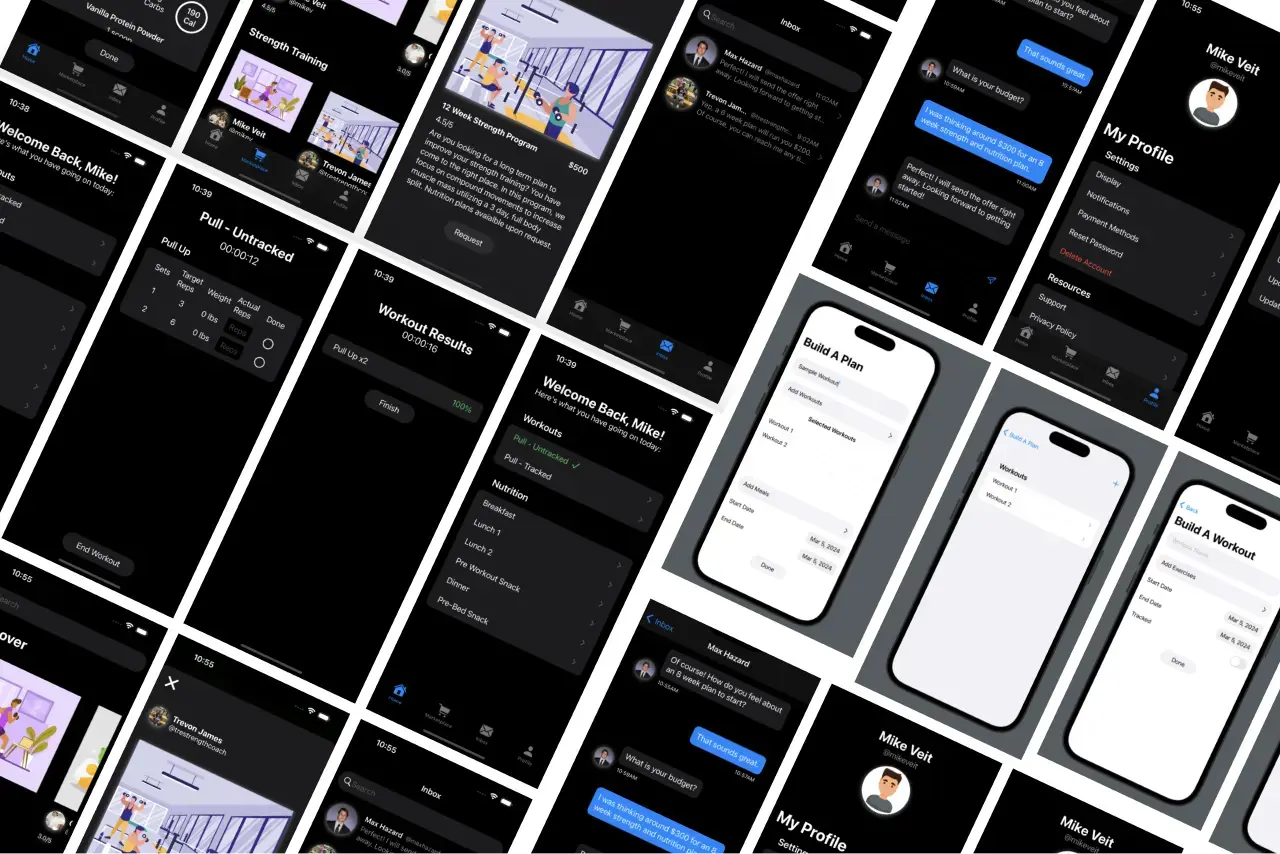
Trainer Interviews
I conducted seven user interviews across three segments: clients seeking trainers, independent trainers building practices, and gym owners managing rosters.
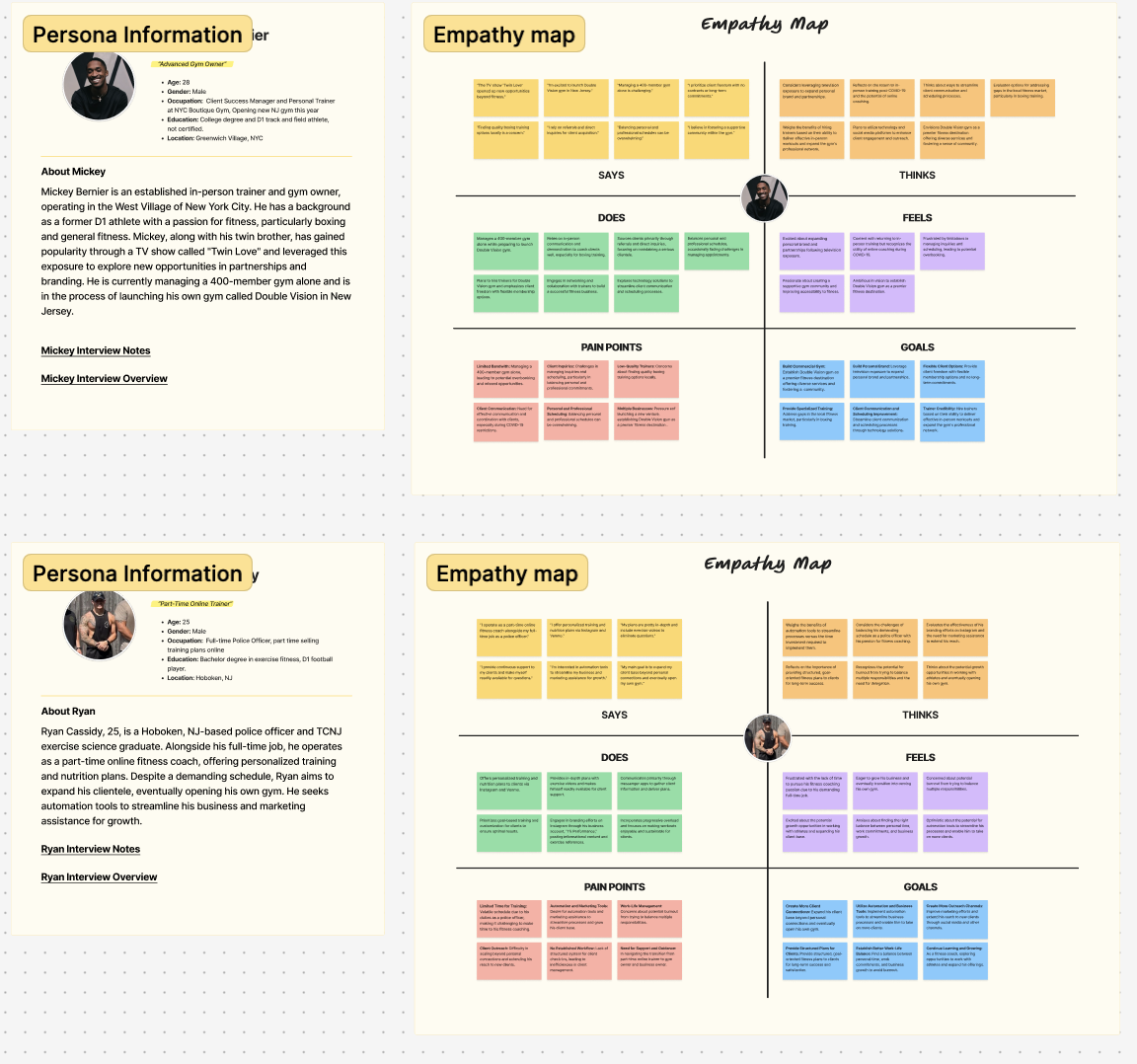
I found three compounding problems. Most trainers operate locally with no digital presence beyond social media. Reaching new clients means constant content creation or expensive advertising—that's not their job.
Trainers juggle spreadsheets, text threads, and payment apps. There's no unified system for scheduling, workout plans, nutrition tracking, and billing.
Certifications exist but verification is manual. Clients can't easily distinguish qualified trainers from enthusiasts with good lighting.
Trainers want more than a marketplace. They want a suite of tools—workout builders, nutrition trackers, client communication, progress analytics. The marketplace gets them clients; the tools keep them.
Client Research
Finding a trainer means asking friends, searching Instagram, or hoping the gym assigns someone competent. Reviews are scattered. Credentials are unverifiable. Pricing is opaque until the first awkward conversation. Clients also needed accountability — most fitness apps track workouts but don't connect you to a human who adjusts your plan when life happens.
Clients wanted something simpler: find qualified trainers, see transparent pricing, read reviews, and communicate easily. They didn't want another app to manage—they wanted trainers who manage everything for them.
Competitor Analysis
The fitness marketplace space has established players, each with distinct approaches. Local gym apps tied to specific facilities offer no portability for trainers, limited selection for clients.
There were also software suites for existing trainers — excellent tools but no discoverability. Trainers must bring their own clients.
Synthesizing Findings
This resulted in documented user interviews, empathy maps, competitor analysis, and market research. I defined a context framework based on these interviews, prioritized features, business objectives, and success metrics. I created information architecture, business objectives, risks and what could be done to reduce them, a feature roadmap, and technical requirements to complete them.
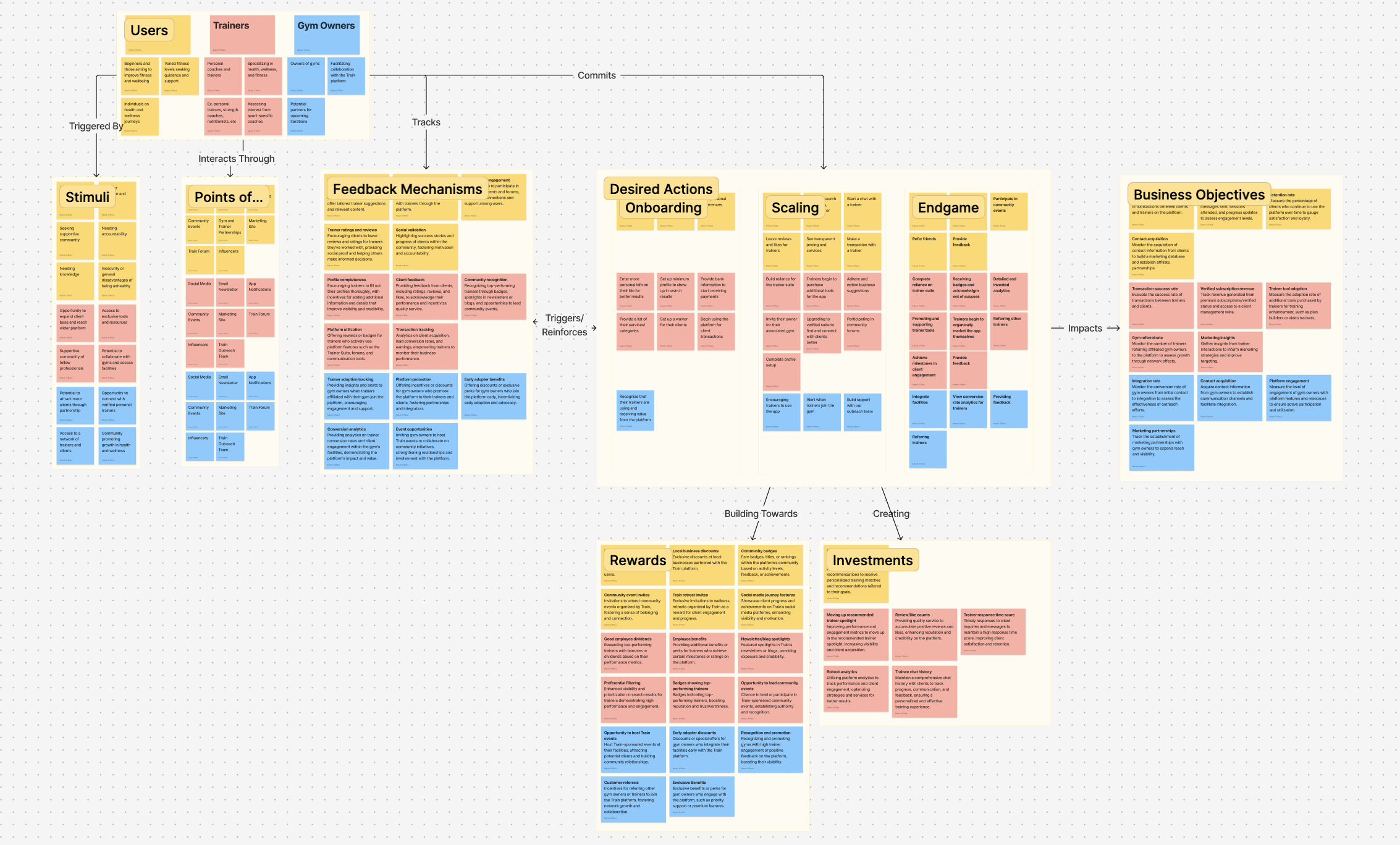
I created desired actions for each user. The app's proposed form followed function — a client dashboard for active plans, upcoming appointments, and tracking goals; a marketplace for trainer discovery with search, filtering, and categories; an inbox for messaging; and a profile for settings, payments, and account management.
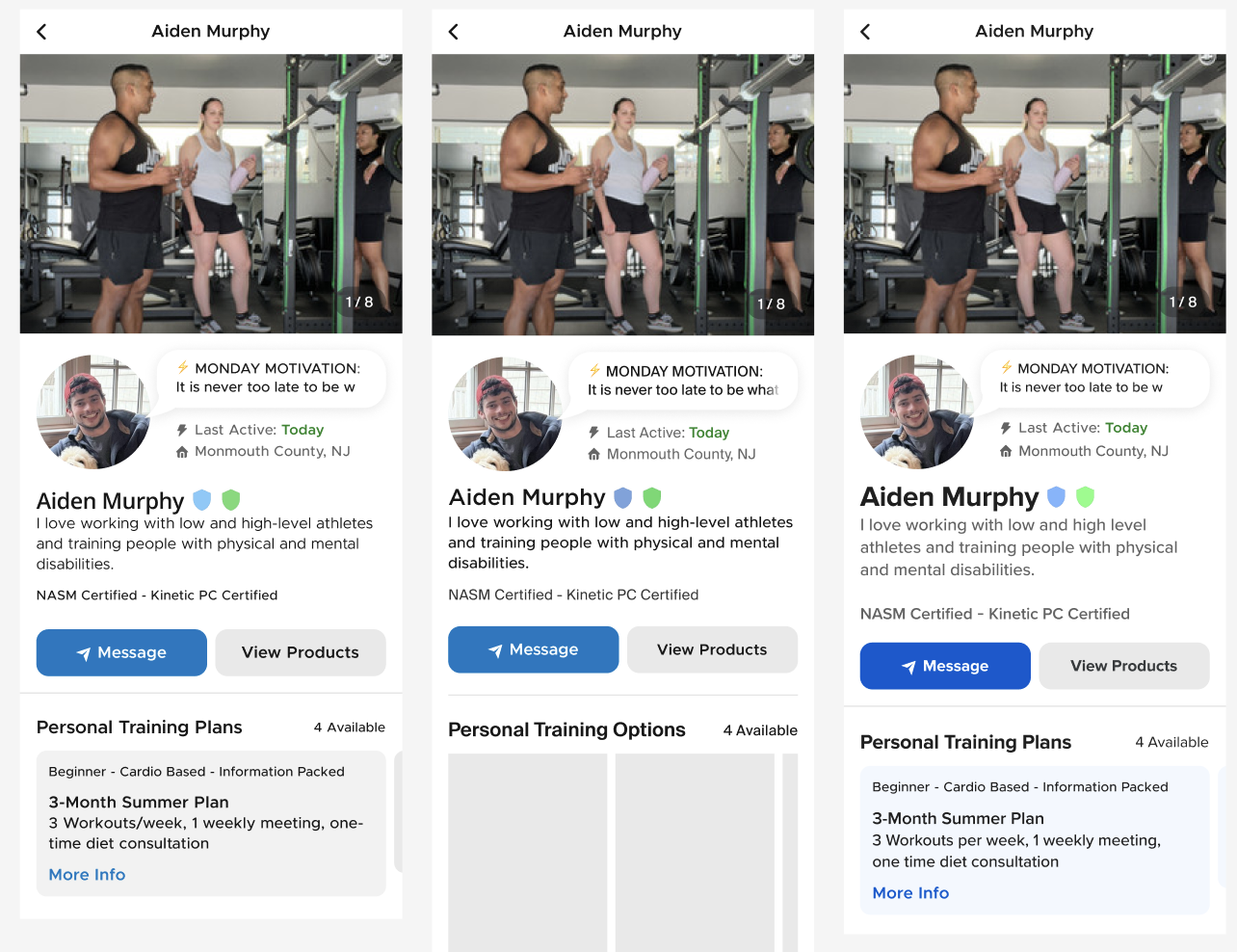
Profiles were designed to communicate credibility quickly with verifications, activity statuses, location, bio and specializations, a photo gallery, available training plans, and reviews and ratings.
All communication had to happen within the app. Documented conversations protect both parties, enable platform features like payment handling, and prevent trainers from taking clients off-platform.
Reflection
The hardest part was scope discipline. Every interview surfaced new features trainers wanted — scheduling, video calls, payment plans, referral programs, gym partnerships. The context framework helped filter these through user motivation: which features support business goals, which drive investment, which actually support a user need, which just sound good?
If I did this again, I'd spend more time on the gym owner segment. Trainers and clients are the core marketplace, but two-sided marketplaces are difficult, especially when the communication and payments aren't sticky enough to keep trainers and clients from leaving the app.
Gym owners seemed able to benefit most if they could onboard their entire roster, but many built custom apps or used white-labeled options—a solved problem.
The founder used these deliverables to pursue investment. I provided the foundation for that conversation, but also discovered the extreme technical requirements and risk if not executed well.