
First note on the new site.
First note on the new site.
I want a place to put thoughts that are too small for an essay and too useful to leave in a notes app. This is that place. A note can be one line or it can run for several paragraphs, and the feed will cut the long ones short so the page stays easy to scan.
The rule I'm trying to follow is that writing more should never force me to pick a different format. A short thought and a long one are the same kind of thing, and the page decides how much of it to show.
If a note is still going after five lines, you get a link to read the rest.
Read more
"Don't compete for attention you haven't earned." The rule this site was rebuilt around.
The docs for the editor behind this site.
A single photo shows as one wide image.
Three photos sit in a row.
Five photos show four tiles and a count.
 +1
This article exists to check how long posts render. It has a heading, a table, a quote, a list and a captioned image. A heading Body text continues here, with a link inside it. A quote sits behind a thin rule and is indented. Phase What happens Typical length Discover Talk to people and explore competitors Two to four weeks Design Sketch, prototype and test Two to six weeks Build Ship the smallest useful version Four to twelve weeks Launch Release, listen and iterate Ongoing First point Second point Third point The four phases of the product development lifecycle
Read more
"Human reason can neither predict nor deliberately shape its own future. Its advances consist in finding out where it has been wrong." - F.A. Hayek When I was in Panama, Bocas del Toro, a tropical Caribbean set of islands, the motorbike rentals were more expensive than I anticipated. So were the ATVs, then even the manual regular bikes. It was more economical to hire 2-3 round-trip taxis a day. At first, I attributed the prices to the "tourist tax", but then I learned the local rental prices were not considerably better. Then I suspected a price cartel between the two or three main players on the islands, but even "black markets" like Facebook and second-hand were also not considerably better than the market-setting prices. I learned one of the rental companies went from 8 to over 100 bikes in about 8 years. I wondered if there was a play for a motorbike rental business. Spending more time in Bocas, I realized the prices seemed extortionate because of the deterioration of the vehicles. Bocas has a notorious climate known to completely degrade equipment - electronics, building materials, paper - everything on the island had a heavy deterioration tax. Even long-term and frequent visitors, who eventually earned a bit of a discount, were expected to bring their bikes and ATVs in for weekly checkups. Maintenance was a top priority and a top expense. On top of the mechanic's fees, Bocas is an island. Parts and equipment were slow to arrive and expensive. Even hardware stores seemed to have low inventory and plenty of demand. Beyond the balance sheet, could I expect fair treatment from local servicemen? Could I trust employees? Would my bikes be targeted for vandalism for undercutting local businesses? I don't think my bike rental business would be successful. The current prices signaled an underlying issue that all Panamanians and investments on the island deal with. When I first arrived, the transport seemed expensive and the property seemed cheap, a local would (begrudgingly) admit the transport prices were reasonable and the property pricing was opportunistic. The story of why I did a lot of walking through Bocas is a story of price signals and simple predictions. The Austrian economist Friedrich August von Hayek wrote the foundational work on price signals in his 1945 work "The Use of Knowledge in Society". Hayek demonstrated that prices are the best aggregators and transmitters of localized information such as supply, demand, substitutes, and complements of goods and services. Buyers are incentivized to seek the lowest price possible, sellers are incentivized to sell for the highest price possible. Where buyers and sellers meet in the middle is the price equilibrium. Where there's a fair deal and a handshake (a fair deal: when both sides are equally unhappy with it). Hayek and other free-market economists argue against centralized planning and coordination of prices. Hayek believed that knowledge (what is a fair price?) is irreducibly local and the "dispersed bits of incomplete and frequently contradictory knowledge" held by individuals could never be properly aggregated by a central authority. Most champions of free-market economics would not say that central planners are incompetent, but that the nature of the data like 'how much will this neighborhood pay for bread' or 'how much can this machine shop produce by Tuesday' is knowledge that "by its nature, cannot enter into statistics". The only incompetent central planner is one who thinks they can accurately represent localized knowledge. Hayek's price signal mechanism has a second property that has been realized today by prediction markets such as Polymarket and Kalshi. Price signals can serve as future event prediction machines. Prediction markets allow participants to trade futures on specific events such as number of federal rate cuts, March Madness winners, who will have the number 1 song on Spotify. If you believe a presidential candidate has a 70% chance of winning and the futures are priced at $0.55, then the future price - the aggregate of all market participants - is undervalued by your prediction and you should buy. Prediction markets are the wisdom of the crowds in a formal market structure, quantitative odds of a specific event happening with a price signal. Ask 10 people how many jellybeans are in a jar, you'll have 10 wildly different estimates. Ask 1,000 people and the average guess is usually pretty accurate. Ask 1,000 people to bet on it, and those estimates tighten. Economists Michael Maloney and J. Harold Mulherin documented the stock market's response to the Challenger Spacecraft explosion as one of the fastest prediction machines. Minutes after the explosion, the stocks of major contractors involved in the build all dropped about 3-6%, the O-ring manufacturer's dropped 12%. The stock market successfully identified the culprit before the official Challenger investigation (which included Richard Feynman) took months to confirm. Companies like Hewlett-Packard ran an internal prediction market amongst their employees to forecast how many printers they should expect to sell - the prediction market results consistently outperformed top-down management predictions. Imagine asking a software team to bet on when a feature would actually ship: management sets the over/under at three months, six of the eight team engineers bet the over. That's a signal that there is localized knowledge the timeline should account for. Prediction markets are not perfect. Their participants are limited to people who 1) know that online prediction markets exist, 2) are willing to open an account on one, 3) understand how futures contracts work (to an extent), and 4) are willing to deposit money to make a bet. There is also a signal extraction problem: does the price of oil rising mean there is a war in the Middle East or an incoming subsidy for electric vehicles? The reason for price movement still relies on some amount of localized context. Prediction markets don't solve the distributed knowledge problem. Participants are self-selected, signals need interpretation, but within those boundaries is the most honest price on a future event - quantifiable and able to be evaluated further by those who own the markets. The first ambitious attempt at a centralized prediction machine was by The Simulmatics Corporation, who rose to prominence as political consultants when the JFK campaign hired them as the nation's first "social scientists". Simulmatics were kept quietly employed through the LBJ years. They promised a machine that could effectively tell you what to say, to whom, and to what effect. How would swing state voters respond to a Catholic candidate? How would bus desegregation move the southern vote? For the JFK election - tightly defined criteria, target markets - Simulmatics delivered. They built a prediction machine that segmented American voters into 480 demographics and ran punch-card simulations to predict how each segment would respond to a candidate's positions on certain issues. The localized knowledge Hayek argued could never be fully aggregated seemed like it was about to crack open. Simulmatics had a machine that could process dispersed local data at scale, and use it to poke and prod at the hearts and minds of the American voters. Then, Simulmatics were sent to Vietnam. In Vietnam, the weaknesses of rudimentary data collection were revealed. Simulmatics sent researchers in American suits to Vietnamese villages to learn about their attitudes on the war and the Viet Cong. Nobody in a hamlet shares honest feelings with men who move like central intelligence officers. Simulmatics modeled Vietnamese sentiment as more favorable than it was. Some of their native Vietnamese researchers caught wind that the Viet Cong would not honor the planned Tet ceasefire. The Simulmatics higher-ups did not process the signal and missed the Tet Offensive entirely - a devastating surprise attack by the Viet Cong that erased the little remaining American public support for the war. Simulmatics eventually collapsed, but their members' work on digital networks and data collection heavily influenced ARPANET and early data privacy policy. Simulmatics set out to win elections but their lasting impact was the social science frameworks and collection methods that were iterated upon, eventually contributing to Cambridge Analytica's "Big Data" and Facebook's targeted advertising of the world today. Hayek as an economist was obligated to make economic forecasts. His most lasting work was not any singular prediction, but his price signal mechanism that explains how prices are set and the difficulty of aggregating localized knowledge. The value of a prediction is not whether it is right, it's what building it forces you to understand. For more on Simulmatics, I recommend If Then by Jill Lepore. I wrote a companion note on Simulmatics here. For more on prediction markets, I recommend this podcast and work by Robin Hanson and Bryan Caplan.
Read more
"These are additional notes on Simulmatics I prepared for my Prediction Machine essay that didn't make the final cut, but I think it is a fun bit of history worth sharing. It is all sourced from If Then by Jill Lepore." The first ambitious attempt to pioneer data-driven prediction machines was The Simulmatics Corporation, founded in 1959 in the wake of Dwight D. Eisenhower's back-to-back defeats of Adlai Stevenson in the 1952 and 1956 presidential elections. To Eisenhower's benefit, Adlai Stevenson felt that mass-marketing his campaign was an insult to the American voter. In his 1956 acceptance address, Stevenson said "The idea that you can merchandise candidates for high office like breakfast cereal - that you can gather votes like box tops - is, I think, the ultimate indignity to the democratic process." For two election cycles, Stevenson limited himself to half-hour television speeches and other old-fashioned dreary-yet-intellectual material. Stevenson's 1956 campaign marketing spend amounted to $77,000. Eisenhower's was $1,500,000. Researchers and the marketing "Mad Men" of the late '50s recognized Eisenhower's "I Like Ike" campaign as the coming-of-age of TV and radio adverts - the first campaign where a candidate effectively bought votes by plastering their name and likeness across every TV and radio spot they could find, akin to a toothpaste or cereal brand. Meanwhile, Simulmatics recognized the presidential elections as giant social experiments the United States ran on its citizens every four years with data ripe to study and people in power willing to pay for it. The JFK campaign hired Simulmatics as the nation's first "social scientists," then the administration quietly kept them employed through the LBJ administration through election campaigns to counterinsurgency in Vietnam to predicting urban race riots until the company collapsed. Ithiel de Sola Pool attempted to pitch both the Humphrey and Nixon 1968 campaigns but was rejected by both. Simulmatics' work cut deep into the interests of power. They promised a machine that could effectively tell you what to say, to whom, and to what effect. How would swing state voters respond to a Catholic candidate? How would bus desegregation move the southern vote? For the JFK election - tightly defined criteria, target markets - Simulmatics delivered. The DNC was riding high on their first presidential victory in 12 years and Simulmatics was their secret weapon. Simulmatics' prediction machine could segment the American electorate into 480 voter types by demographic, run simulations on an IBM 704 computer using punch cards, and predict how each segment would respond to a candidate's position on civil rights or religion. The localized knowledge Hayek argued could never be fully aggregated seemed like it was cracking open. Simulmatics had a machine that could process dispersed local data at scale, and use it to poke and prod at the hearts and minds of the American voters. Then Simulmatics were sent to Vietnam. In Vietnam, the weaknesses of rudimentary data collection were revealed. Simulmatics sent researchers in American suits to Vietnamese villages to learn about their attitudes on the war and the Viet Cong. Nobody in a hamlet shares honest feelings with men who move like central intelligence officers. Simulmatics modeled Vietnamese sentiment as more favorable than it was. Some of their native Vietnamese researchers caught wind that the Viet Cong would not honor the planned Tet ceasefire. The Simulmatics higher-ups did not process the signal. They missed the Tet Offensive entirely - a devastating surprise attack by the Viet Cong that became a turning point of the war in North Vietnamese favor and eroded the little remaining American public support. Simulmatics' work in urban development - predicting when race riots would occur - more closely resembled the Vietnamese endeavor rather than the successful JFK campaign. Simulmatics eventually collapsed, but Ithiel de Sola Pool continued ARPA-funded research on digital networks and data collection. His 1983 book "Technologies of Freedom" heavily influenced ARPANET and early data privacy policy and is cited as the precursor to the legal architecture governing online speech today. The social science frameworks and collection methods Simulmatics pioneered served as the foundations of Cambridge Analytica's "Big Data" and Facebook's targeted advertising. Their social science frameworks have been adopted and iterated upon, and are among the first frameworks for social science data collection and modeling using computers.
Read more
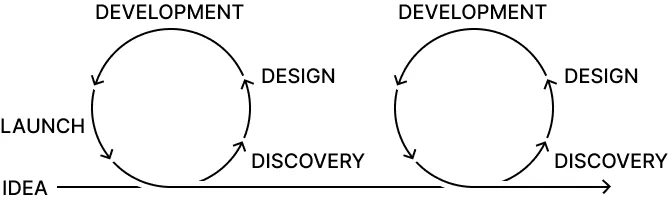
The product development lifecycle is a holistic way to think about a product's journey. It is similar to Agile in its emphasis on iterative, feedback-driven development, but Agile insists upon itself with tools and terminology useful for the boots-on-the-ground workers that stakeholders couldn't give two cents about. Product development is the name of the game. The product development lifecycle is the macro cycle a product moves through. The macro phrases of the lifecycle - DISCOVER, DESIGN, BUILD, and LAUNCH - are constants, they appear in some form in every loop. How each team implements them can change across products and loops: testing, user interviews, and other activities might demand a significant enough budget, but they all fit within the four overarching phases. The lifecycle begins with an IDEA - the spark, the vision, the calling to put something out into the world. Everything that follows will rip the idea apart and put it back together again. Write it down, capture it in its most honest form. This doesn't have to be the golden path, but it will be nice to return to during reprioritization (or nostalgia). With the idea in hand, we set off to DISCOVER. This is foundational research. Put the idea in front of as many people as possible. Talk to people and ask the right questions. Listen to what they say and how they say it. Explore competitors — what they do well, what you can do better, what you can take from them and improve. Think about some of these questions: What problem does the idea actually solve? Who are you solving this problem for? What do they think about your idea? What do they understand about their industry that you do not? Will they pay for you to solve this problem? How much? Have other people tried to solve this problem? What did they do well? What can you steal from them? Where did they fail? What can you do better? Do you have the resources to compete with them? Can someone steal your idea and do it better once it's out there? Do you not care if they do? This is where most ideas stop (or should stop). Deal with hard truths now. If you decide it's not worth continuing, that's a win - a good research phase is one where you discover something significant enough to change course. Document your user research and what your competitors do. Spend time with what you write down. Recognize what you still don't know or understand. Write those gaps down too - they will surface as you move through the lifecycle. Now it's time for DESIGN. The idea was the caterpillar, research was the cocoon, and this is where the idea crystallizes. In this phase you define what you are doing in a way you can communicate to stakeholders, agents, and teammates whether it be technical writing, mockups, or prototypes. You should be able to clearly and concisely describe who you're building for, what you want them to do, and why. You don't need to change the world in this phase, but you do need to describe how what you're doing is valuable. Different teams and different cycles will move through design differently — maybe an early cycle is more about interviewing users, maybe a larger team can run more experiments, maybe later stages focus on refining UX decisions. With the game plan defined, then starts the BUILD — the standard development work where the wizards enter their chambers to study and cast spells and return with compiled code. They do their due diligence: testing, strong CI/CD. If anyone has questions, they can ask an AI agent with codebase access to explain it in their own terms. Once it's built, it's time to LAUNCH. This doesn't always mean straight to the app store. It could be to a focused group of testers, easily segueing back to DISCOVERY. Or it could be to the public, ready to be monetized or met with an accompanying service. How AI Affected The Product Development Lifecycle Some people think AI has made development 50x faster. Some people think not at all. I think AI helps me write code at a clip about 3x faster than without. The same dollar buys about 3x as much development output from your wizards. When code is cheap, you can spend more time on planning, research, and iteration. From there, we have three new moves: 1) raise the bar for what gets developed in the same amount of time, 2) reallocate the time and money pointed at engineering to other parts of the product development lifecycle, or 3) take your winnings, close the loop, and iterate faster.
Read more
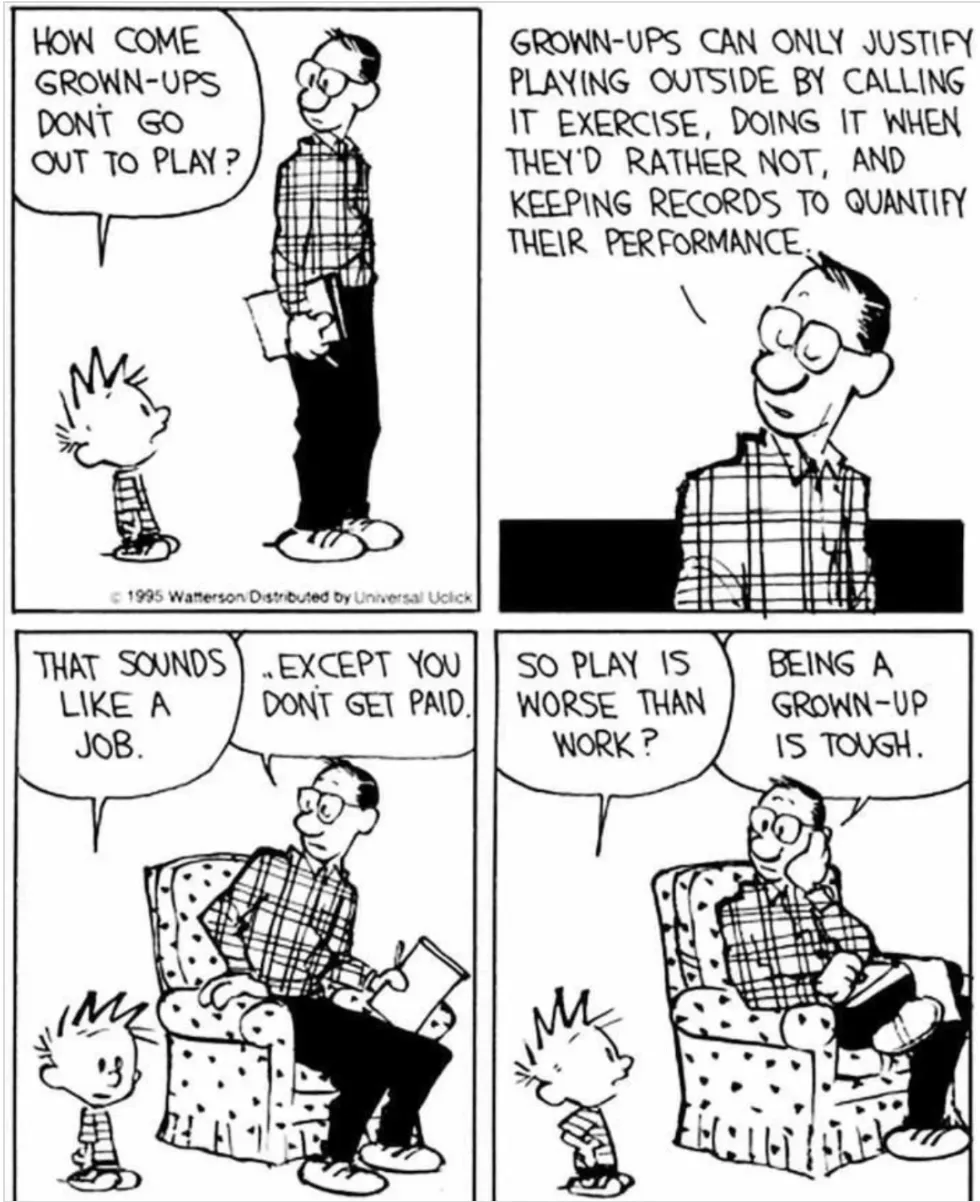
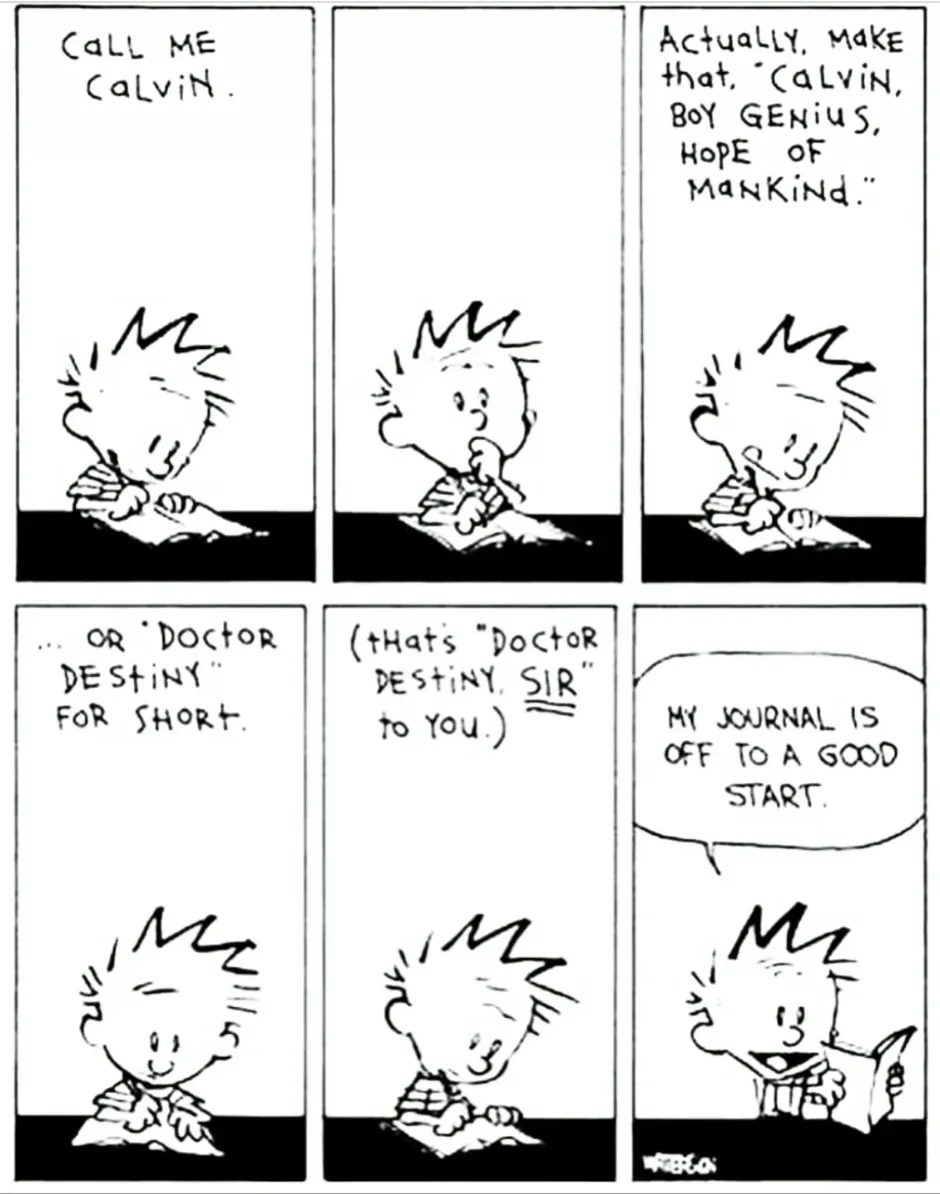
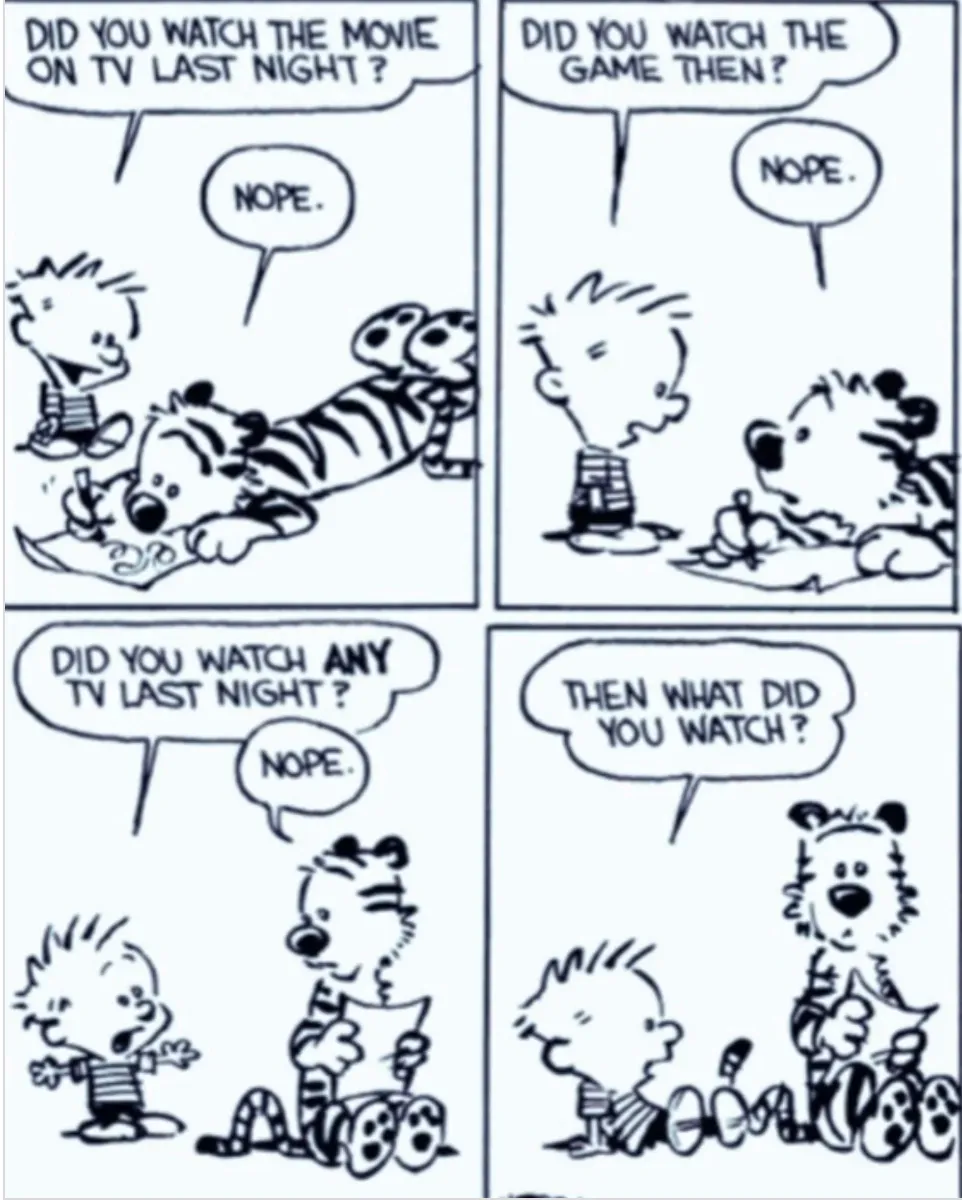
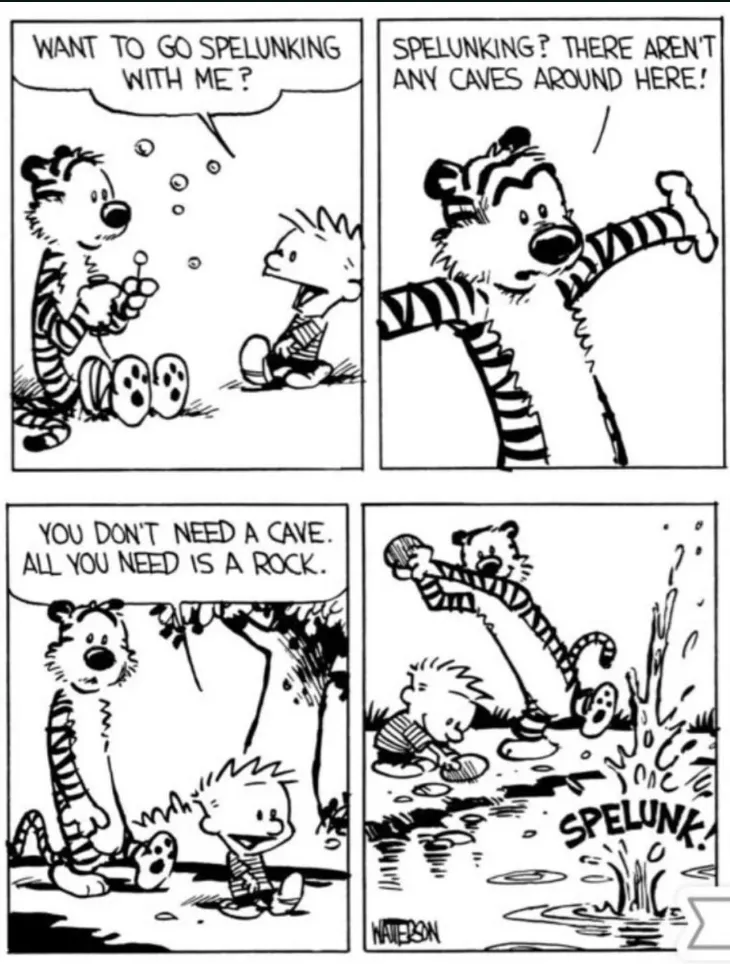
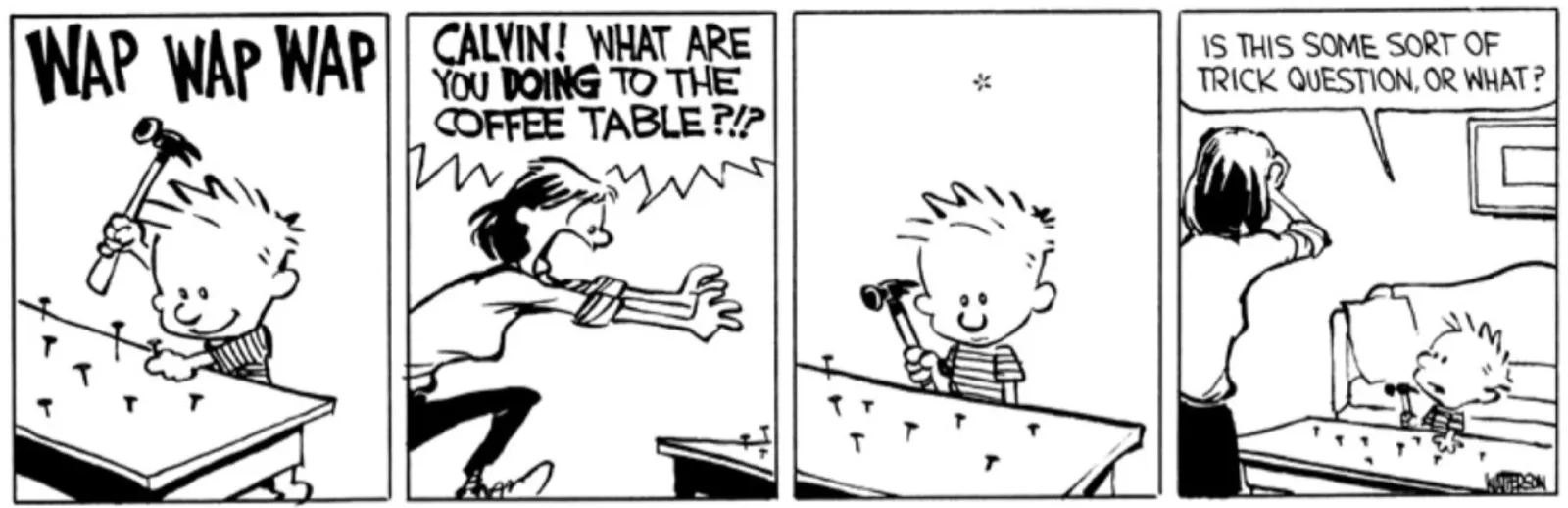
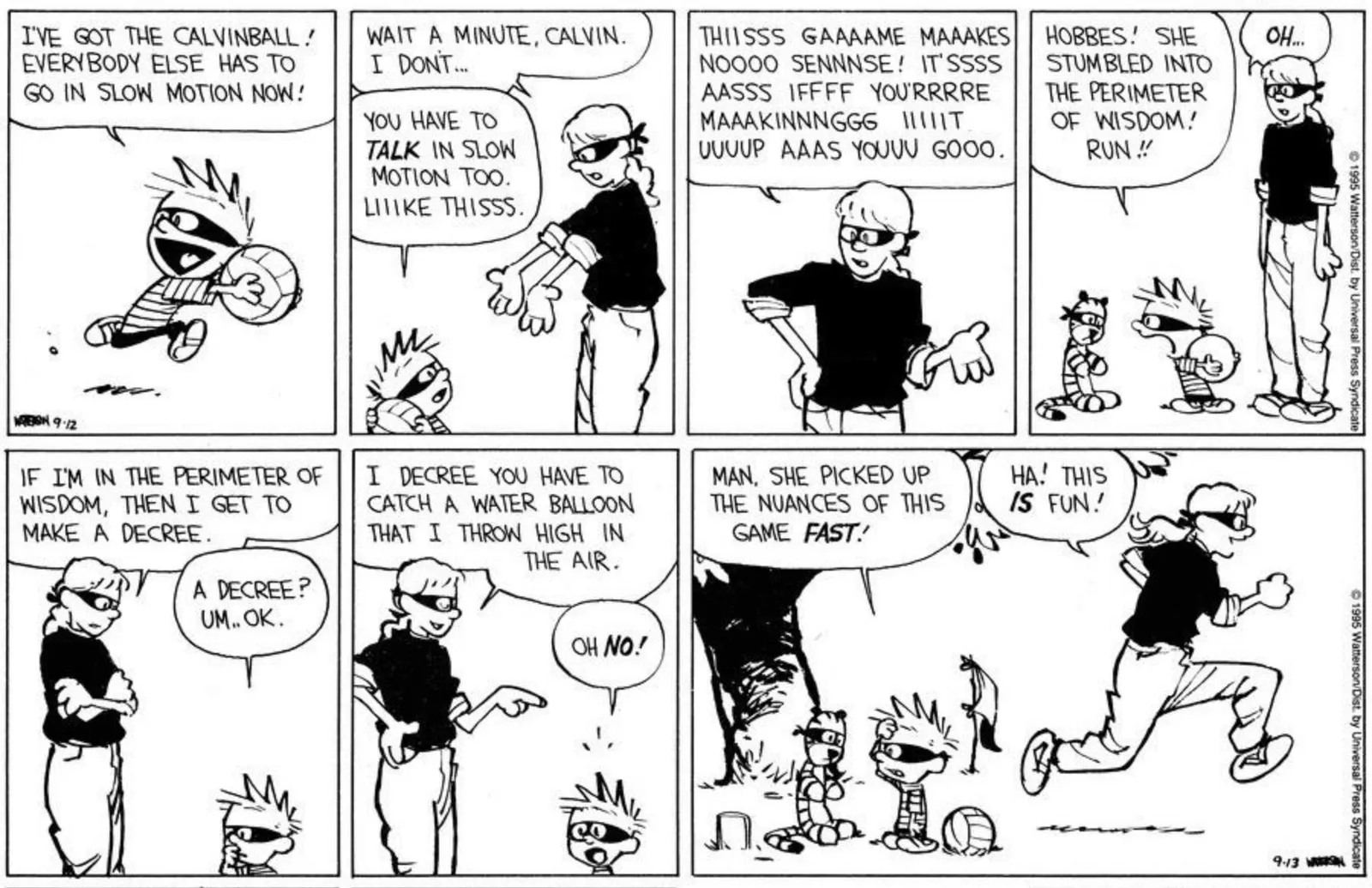
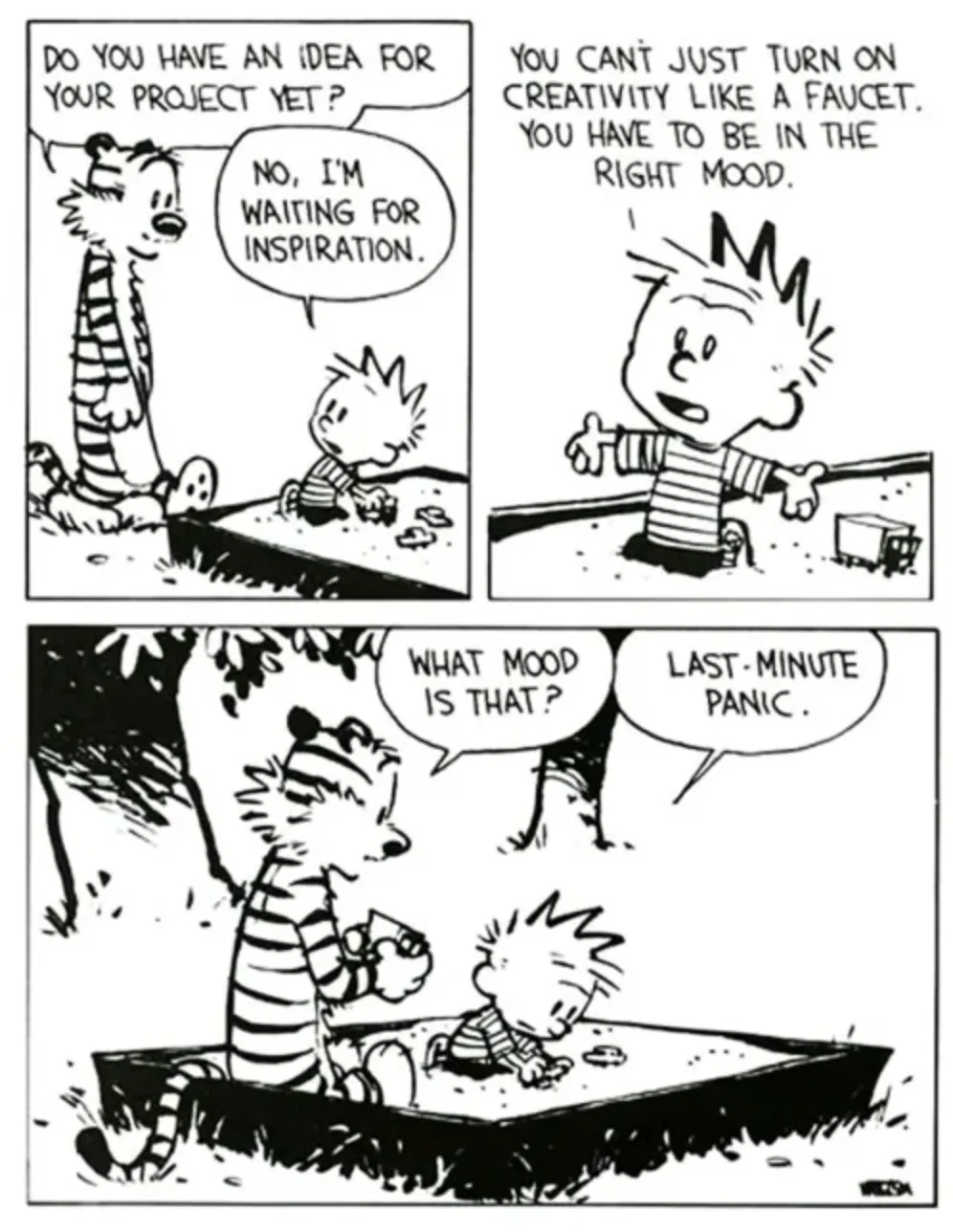
Bill Watterson is the writer of Calvin and Hobbes - a comic strip I devoured as a kid and have been nostalgically revisiting. I've always admired serial writers like Watterson who practice consistent creativity - as Watterson puts it: "My job is essentially to come up with three hundred and sixty-five ideas a year." There's something romantic about a disciplined tradesman in their daily drafting room letting their mind play, refining what their mind and tools allow them to put on paper. Consistent, applied creativity while refining a skill. I never felt Calvin and Hobbes insisted upon itself. It never had to signal to the reader that it was profound; the depth came from genuine consistent practice. I never felt the comic wavered to speak to any audience other than people trying to live playful lives. Everything I've since learned about Watterson himself perfectly reflects how I felt about the comic strip and its characters. Watterson never sold the commercial rights for Calvin and Hobbes. He would rather his characters never be misrepresented or diluted for the sake of more money. This echoes a question I always ask myself: would you rather share more of yourself and have it misrepresented, or not share at all?. Watterson delivered a wonderful commencement speech at his alma mater which spoke to the importance of play in life and in work. Here's a passage: "As bright, creative people, you'll be called upon to generate ideas and solutions all your lives. Letting your mind play is the best way to solve problems ... A playful mind is inquisitive and learning is fun. If you indulge your natural curiosity and retain a sense of fun in new experience, I think you'll find it functions as a sort of shock absorber for the bumpy road ahead." Full transcript: Invent Your Own Life's Meaning - Bill Watterson Some of my favorite strips:
Read more
No one is free from uttering stupidities. The misfortune is to say them very carefully. - Michel de Montaigne, Essays I consider myself an early adopter of agentic engineering - designing a system where AI agents continuously iterate and deliver sans human oversight. Claude Code has been open in a terminal for me since April, yet I assure you everything in my essays is written only by myself. I will certainly say stupid things, so when I do, I want to say them with honesty. I write as an attempt to explore, not to declare truth, but to try to understand my ideas. The only constant is change. Creating a barrier between my own thoughts and what I communicate with an agent feels insincere. The agent's output feels like hardened ice atop a running river - bound to crack and disintegrate, an artifact of a state in time floating unsteadily over water that changes with the tides and seasons. I'm thankful for snowy winters in New Jersey. Winters are cold and insufferable regardless - at least with snow we have something to show for it. When the first snowfall arrives and begins to accumulate, it's beautiful. It's pristine. It lies untouched and untested. Then once the storm settles, it's time for play (or work). The streets are plowed and polluted, the snow turns into a slush of gravel, dirt, and wet. The snow is dirtied, the icy river accumulates trash. We shovel and redirect the snow in ways unlike nature, it's designer, intended or thought up. The hardened snow eventually returns to the flowing river. The river changes, but it remains. Water is constant. For me, writing with agents - whether words or software - is creating a layer of hardened ice atop a flowing river. The river is the changing problem, the company you're trying to solve it with, and the people you're solving it for. The icy output is uncooperative. Like a snowflake, it cannot be rebuilt exactly the same way twice. It grows exponentially, yet one crack will break it. It is immovable yet experience shows it is unreliable. It blocks the flow of the moving, changing river beneath it. Eventually, energy is spent navigating around what has accumulated rather than letting the river guide it. Building with ice can be purposeful - a temporary bridge that eventually recedes back into the river. Building with agents allows me to collect new information. I fast-forward into problems, I experiment and validate ideas, I build icy bridges over gaps that aren't meant to last - but now I know what exists on the other side of the gap, and I can build the proper infrastructure for what's over there. Through my explorations with agents, I've consistently found three gaps. The first is the comprehension gap - the difference between what exists and what I comprehend about it. What exists? The river, the idea, the problem, the company, the solution, the users - all consistently flowing and changing. I spend most of my time looking at the surface of the water, while the topography below and moons above dictate the surface more than anything I can recognize. The true watermen of the world have a complete mastery of the wind, the swells, and the changing surfaces below - and even they stand on the shoulders of astronomers and explorers before them. The surface - what I do recognize - is a small representation of what actually exists, and a poor predictor of what the surface will look like compared to wind forecasts, tide schedule, swell forecasts, and knowledge on how they will all interact with the ocean floor. The comprehension gap is large, research and collaboration help close it. I maintain it's sometimes better to begin navigating with what you have and understand the boundaries of the unknown. Navigating close to the boundary has often revealed more about it than any preparation would have done for me. The second gap I've experienced is the communication gap. Agents operate on "what I communicate to them" rather than "what exists." This holds true with any agent or employee - what I say overrides their understanding of what exists. Careless writing or speaking convolute what I'm trying to accomplish. Needless communication and unclear rambling conflate ideas and makes people lose interest. Everyone operates better with clear instructions. In the age of constant communication and agentic engineering, learning how to clearly express myself becomes a larger part of my duties in work and life. The third gap is the most insidious: the accumulation gap. When I work with agents, I find they add their own noise to each output - hallucinations, misplaced priorities, needless complexity. Left untreated, an unrestrained AI can't distinguish its own noise - or my own noise from the comprehension or communication gap - from actual signal from the problem to be solved. The noise compounds, it creates uneven chunks across the ice that looks smooth from a distance. As it accumulates, it becomes harder and harder to break out, to restructure, while the river continues to move underneath. You can use the ice to traverse where you couldn't before. You can adapt like the iceboats that outrun horses, but eventually the ice breaks - a single crack renders it all unusable. The iceboat innovation built atop the hardened ice becomes a burden. Maintenance of the features built for the ice takes up space like technical debt. Time spent building on an unstable foundation was time away watching how the river is changing. Until I better comprehend what exists, until I feel I can clearly communicate it, and until better tools and techniques exist to help guide agents - I've grown overly cautious of playing on the ice. I grew up hearing stories of friends and family falling through, taken by the current, unable to break back through the icy layer from underneath. Sometimes it takes falling through yourself to understand how quickly the ice can collapse. Agents have helped me extend my knowledge of what exists and move quickly through scaffolding, boilerplate, and experiments. Relying on the icy output as a foundation, as replacement of my own understanding, has failed me.
Read more
The context transfer gap has two parts. The first is the loss between what exists - a problem, a product, the source - and what you comprehend about what exists. The second is the loss between what you comprehend and what you can clearly communicate. When you delegate work to an AI agent, they operate on what you can communicate, not what exists. Noise is added at every step in the context transfer gap. Bias and experience in the subject matter obstructs what we are able to comprehend. Our ability and time spent on speaking and writing impacts how we communicate. Agents cannot separate what is noise and what is signal. Agents add their own noise to each output - needless code, hallucinations, assumptions. The noise compounds, agents operate on previous iteration further away from what exists. The output hardens with each cycle as interdependencies grow and the code becomes dense and more difficult to untangle. The connection between what is being built and signal from what exists is lost. Eventually you need command over what you built. You learn more about what exists, a new feature is needed, a bug is found. You are blocked by a hardened codebase you either attempt to understand, or cut off and start over. Moving fast and getting feedback is great, moving forward without understanding what was built will fail. How far you can build depends on what you can comprehend and what you can communicate. How to Work with Agents Agents help you understand what exists, and what you are building along the way. Agentic code is cheap - you can spin up branches, fast-forward into problems, find solutions, and refactor early. Development time is faster, research and design can be prioritized. Agents help you move fast when deep understanding isn't necessary - syntax, scaffolding, boilerplate. You can lose signal from what exists quickly, and you can lose understanding of what is being built quickly. Both signal it's time to stop before the code hardens, taking time to rebuild context and understand wahts been build. The code might work, but make it yours before moving forward. Agents extend waht we build, but they dont repalce understanding the artcitecture, the human intuition, the sngal between gaps that humans feel but cant quantify. That is what our job shifts to focus on. As agents improve and their noise dampens, we prioritize better comprehending and communciating what exists, and moving responsibly with agents.
Read more