
Cureader
I built Cureader to learn React Native and to encourage myself to read more. I struggled to find good sources. Most of my content came ranked by engagement — stuff I clicked on impulse, not what I actually wanted to read. Feeds built on engagement hooks aren't how I want to spend my scroll time. I wanted it decentralized. RSS seemed like a perfect fit because content was published independently, not tied to monetization. I wanted Cureader simple enough for everyone — a passive stream of content you actually enjoy reading, free from engagement algorithms.
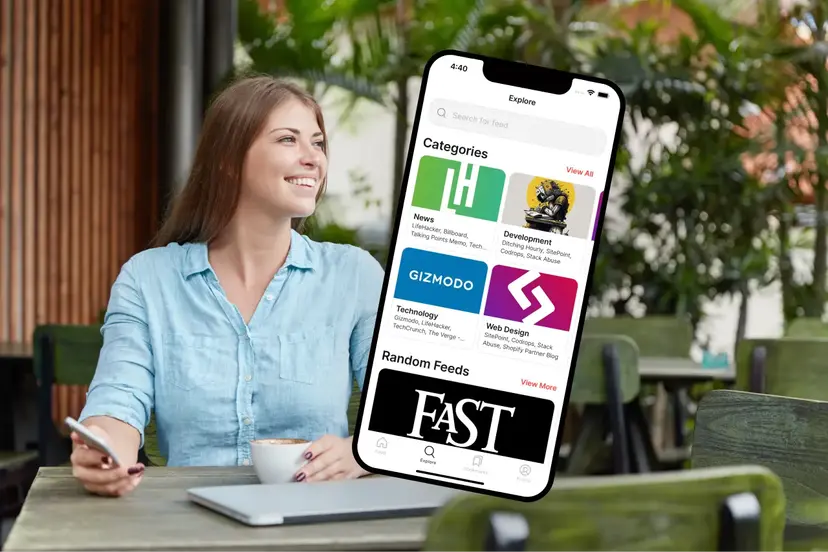
The biggest obstacle was finding an audience. I found RSS power users who had built their own custom feeds and loved their current tools, and then users who didn't know what RSS was. I focused on building for beginners first, developing a strong foundation before looking to accommodate power users. I wanted Cureader to feel mindful, avoiding emotional triggers or gamification techniques.
App Design
I used standard interaction patterns. I designed within my development skills rather than committing to ideas I couldn't build. I kept the UI simple and familiar — nothing experimental.
I lacked custom components for headers and nav bars. Now I can build those. My React Native skills limited how much I could experiment with interaction patterns.
App Development
I started developing with Expo but hit issues with Redux, customization, and dependencies. I ditched Expo too late in the project. I kept parsing on-device — lighter than expected, though I always knew I might need to move it to the backend. The parsing limits were clear from the start. Replacing the parser never seemed too hard. I kept Expo to publish to the app store, but stopped designing around it. Expo limits scalability. Given what I've learned, I'd restart rather than improve the existing codebase.
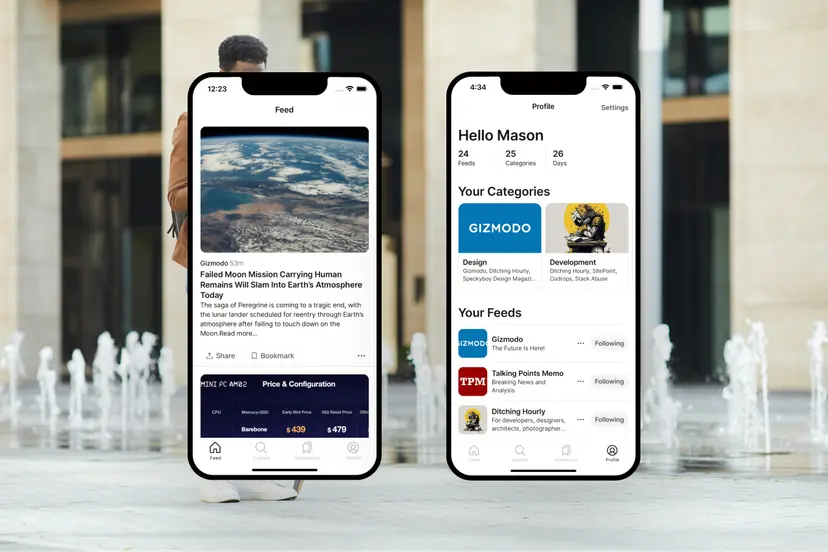
Knowing I'd eventually need to rebuild the backend discouraged me from continuing. Supabase worked well: simple auth, cheap database, and I already knew Postgres. RSS Parser (NPM) saved me a lot of time. I started with Swift and only had an iPhone for testing. I tested briefly on Android but rushed to market without full Android support.
When I hit state management issues, I saw that React Redux and Expo wouldn't mix well. I needed a major overhaul.
The hardest part was syncing state between subscriptions and the frontend — waiting for database writes, then passing results back. I should have used React Query or Redux. I didn't anticipate the problem, so I made hacky fixes rather than rebuild the app context. From a frontend view, RSS sources had less uniformity than I expected — and worse feed quality. I let users edit feed photos, descriptions, and titles. Some feeds had names like "newyorktimes.com | New York Times | RSS Feeds | Most Popular" — hard to scan in a list. I hardcoded hacks to handle character encoding and other quirks. At launch, users couldn't find relevant feeds. So I manually tagged every new resource. This got exhausting fast — something AI could do. The content quality was lower than I expected. I added about 70 feeds myself. Users subscribed to the popular ones. There was no trending feature, little topic sorting — new users couldn't find relevant content.
State management struggled most with subscriptions and feed updates. Feed structures varied wildly. Many were poorly maintained or deprecated. I let users suggest new titles and photos for feeds — a necessary feature.
User Feedback
I tracked three metrics: signups, users who subscribed to a feed, and users who saved an article.
User interaction was simple. No one struggled with it — no glaring issues, though room to improve. Next time I'd build a stronger backend and offload parsing and caching.
Given my skills at the time, the user flows held up well. Search either found an existing resource or added a new one automatically. The Supabase connection was messy, but it worked — except for some state display bugs.
My assumptions about RSS as fair, mindful content delivery held up. I enjoyed using the app. The content felt unbiased and interesting — I didn't feel like I missed anything.
Most feedback came from people already into RSS. Common question: "Where did you find all your feeds?" As expected, the biggest issue was helping new users discover feeds.
Retrospective
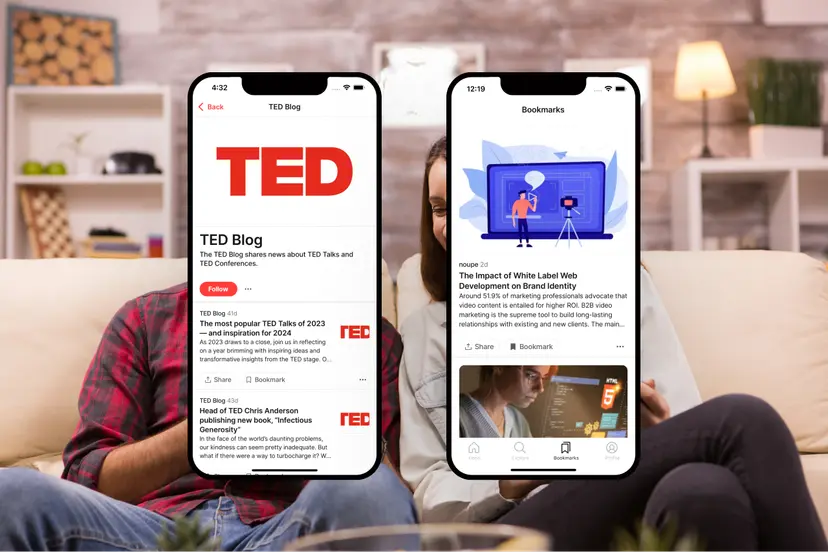
Manual tagging took more work than I expected. I wish I'd planned tagging automation from the start. Storing feed data on-device was lightweight but some parts would have scaled better on a backend. Next time, I'd build reporting alongside any automation.
I'd spend more time on the backend or rebuilding state management. I rushed to market, then faced breaking changes for future updates. I wish I'd added better analytics.
I learned a lot about React Native. I'd now expect less uniformity from web data sources.
Next version: more headlines, fewer photos. Show more headlines so users can scan quickly. Photos as accent, not focus. I learned this from research, not user feedback.
RSS was the right choice. When feeds work, they're great — but they come with issues. It's safer than building a platform where users generate content just for the app. Future versions should: improve feed quality, better explain RSS to users, and boost discoverability.
Future AI Integrations
AI would solve several key problems. First: consistent data organization. AI could fill gaps, adjust content, tag feeds and articles by topic, and eventually power recommendations. AI could enable search by topic rather than just headline. I prioritized feed recommendations over story recommendations to avoid engagement bait. I'd like to add AI carefully, weighing how to avoid engagement-driven design. Discovery could be AI-driven, but main timelines should stay chronological, not popularity-ranked.